



Hejaz railway could reshape regional trade routes
The rail and logistics agreements signed in Riyadh on June 9 between Turkey and Saudi Arabia signal the emergence of a strategic Eurasian land corridor designed to reduce the Gulf’s reliance on maritime checkpoints increasingly threatened by missile warfare, proxy conflict, and geopolitical coercion policies.
Turkish Minister of Transport and Infrastructure Abdulkadir Ural Oglu and Saudi Minister of Transport and Logistics Saleh Al-Jasser have officially established a framework for cooperation in the field of railways that transforms the concept of the historic Hejaz railway in the Ottoman era into a modern geopolitical infrastructure project linking Europe, the Levant and the Arabian Peninsula.
The proposed corridor would link Turkey through Syria, Jordan and Saudi Arabia before eventually extending into Oman and the Indian Ocean, thereby creating a land-based trade structure capable of bypassing the Strait of Hormuz during periods of regional escalation.
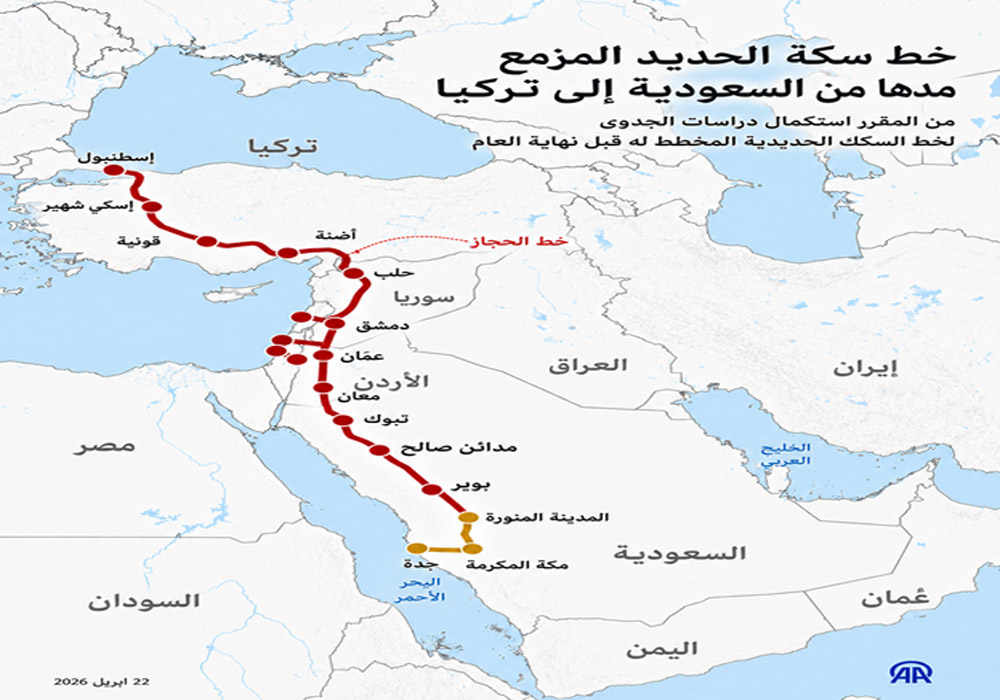
These agreements also reflect tangible progress in the path of regional integration, by accelerating the feasibility work and technical coordination that began under the previous transport arrangements between Turkey, Syria, and Jordan, indicating the crystallization of a strategic project that goes beyond immediate diplomatic considerations towards reshaping patterns of regional connectivity in the long term.
The revived rail corridor will integrate directly with Turkey’s European rail network, allowing Gulf countries’ exports and logistics flows to reach the Mediterranean and European markets via NATO-linked territories, rather than relying exclusively on vulnerable shipping lanes.
And the project is based on increasingly important strategic considerations in the Gulf countries, represented by growing concerns about the vulnerability of the Straits of Hormuz and Bab al-Mandab to disruption, in light of the escalating risks of missile attacks, drones, sea mines and activities carried out by proxy forces, threatening the security of supply chains and the continuity of international trade movement.
Saudi Arabia’s participation demonstrates Riyadh’s broader strategy to diversify the economy within the framework of Vision 2030, particularly its goal of transforming the Kingdom into an intercontinental logistics hub capable of integrating Gulf industrial production with Eurasian trade networks.
At the same time, Turkey positions itself as an indispensable transport and logistical bridge between Europe and the Gulf, thereby expanding Ankara's geopolitical influence across post-conflict Syria while strengthening Turkish influence over emerging continental supply corridors.
The revival of the Hejaz railway also reflects a broader global shift towards strategic competition in infrastructure, as countries increasingly use logistical flexibility, transport redundancy, and supply chain geography as tools to demonstrate geopolitical power.
The proposed expansion of the corridor to Oman and the Arabian Sea would radically change regional trade calculations by enabling Gulf producers to export energy-related goods and cargo without having to pass through Iran’s maritime chokepoints.
The operational viability of the project still depends on the stability of the situation in Syria, the tripartite coordination between Ankara, Damascus and Amman, and the reconstruction of the damaged railway infrastructure that was destroyed during decades of conflict and regional insurgency.
And if the project is fully realized within the next four to five years, the Hejaz Railway Revival Project could become one of the most strategically important infrastructure initiatives in the Middle East since the establishment of modern energy export networks in the Gulf countries.
A strategic corridor designed to bypass the Hormuz gaps
The main geopolitical motive behind the revival of the Hejaz Railway is the creation of a flexible land logistics route capable of bypassing the Strait of Hormuz, through which approximately one-fifth of global oil shipments currently pass, in light of ongoing regional security risks.
Turkish officials presented the railway network expansion project towards Oman and the Indian Ocean as an alternative global trade corridor, aimed at reducing the economic vulnerability caused by maritime disruptions associated with regional tensions, maritime confrontations and the instability of strategic sea lanes.
The land route of this corridor would significantly reduce vulnerability to missile attacks, drone attacks, naval mine laying operations, and asymmetric naval warfare tactics that have come to dominate security dynamics in the Gulf in recent years.
From a logistical and strategic perspective, rail transport is seen as an option that offers greater reliability, flexibility and efficiency compared to other transport alternatives, particularly in terms of container flows, industrial and petrochemical products and supply chains of strategic importance stretching between European and Gulf markets.
The project also provides Gulf exporters with an alternative route to maintain continuity of export traffic during crises, especially when military tensions lead to high shipping insurance costs or partial disruption of maritime trade corridors.
And Turkey’s Mediterranean ports, including Mersin and Iskenderun, could emerge as strategic logistics gateways linking Gulf trade directly to European markets, while reducing reliance on fragile sea lanes that cross disputed waterways.
At the same time, the project complements the broader regional “fortification against Iran” strategies of Gulf states seeking to diversify their transportation infrastructure and reduce their economic exposure to the geopolitical tensions surrounding Iran’s maritime influence.
Saudi Arabia’s involvement in an intercontinental logistics network linking it to Europe is consistent with its vision of becoming a pivotal node in the Eurasian trading system, enhancing its competitiveness within a multi-corridor strategic environment supported by China, India and Western countries.
The strategic importance of the project extends beyond economic considerations, as any targeting of parts of the railway line inside Jordan or Turkey may entail the risk of escalation to a direct confrontation involving major regional powers, and its repercussions may extend to areas associated with NATO, which raises the level of deterrence and increases the cost of any attempt to disrupt the project.
And by creating a backup transport infrastructure independent of vital sea lanes, this corridor enhances the strategic resilience of Gulf economies that are increasingly wary of exploiting global trade routes as a weapon during future geopolitical crises.
Turkey and Saudi Arabia form new regional power axis
The rail agreements reflect a broader geopolitical rapprochement between Turkey and Saudi Arabia centered on economic pragmatism, regional interdependence, and post-conflict stability rather than the ideological rivalry that once characterized bilateral relations.
And for Ankara, the revival of the Hejaz railway reinforces Turkey’s long-term ambition to become the dominant Eurasian logistics hub connecting Europe, the Middle East, Central Asia and the Eastern Mediterranean through integrated transport corridors. Rail technology, construction expertise and operational experience enable Turkish companies to secure large infrastructure contracts associated with reconstruction and modernization efforts spanning across Syria and Jordan.
And Saudi Arabia benefits through direct northern land access to Mediterranean and European markets, while at the same time reducing strategic dependence on maritime trade routes vulnerable to Iranian influence and Red Sea instability. The rail project also provides Riyadh with a mechanism to deepen economic integration with post-war Syria without the need for rapid political normalization processes that remain regionally sensitive and diplomatically complex.
And Syria is poised to regain its historic role as the main land bridge in the Levant, potentially generating significant transit revenues while attracting reconstruction investments needed to rebuild transport infrastructure damaged throughout the civil war.
Jordan’s geographical location transforms the Kingdom into an important logistics intersection that connects Gulf rail systems to transport corridors in the Levant, thereby enhancing Oman’s economic importance within regional supply chain networks.
The revival of the symbolic project of Ottoman-era infrastructure is simultaneously expanding Turkish soft power throughout the Arab world by reconnecting historical trade routes through contemporary economic integration rather than direct political influence.
Religious tourism is also a strategic component of this project, as improved rail connectivity could significantly enhance the efficiency of hajj transport between Turkey and the Levant and the two holy cities of Saudi Arabia, Mecca and Medina.
So the Riyadh agreements go beyond mere transport cooperation: they establish an emerging Turkish-Arab economic alliance capable of reshaping regional geopolitical balances through infrastructure-based interdependence.
exacerbation of competition between regional trade corridors
The Hejaz Railway Revival Project is entering an increasingly competitive geopolitical environment, characterized by multiple overlapping infrastructure initiatives seeking to dominate the future of Eurasian trade connectivity across the Middle East and Indo-Pacific region.
This corridor competes directly with maritime logistics systems, and also strategically intersects with China's Belt and Road Initiative, India-Middle East-Europe Economic Corridor projects, and the proposed Iraq Development Road project.
"For Iran, the rail line represents a major strategic challenge, as it weakens Tehran's entrenched geopolitical influence, derived from the Strait of Hormuz and its surrounding shipping vulnerabilities."
And through this project, Ankara and Riyadh are seeking to build an alternative transport system that would allow part of trade to be diverted away from sea lanes near Iran, limiting the effectiveness of geopolitical pressure tools based on threatening or disrupting maritime navigation during periods of regional tension.
And the strategic geography of the corridor, especially its passage through Turkish territory linked to the Atlantic security system, increases the complexity of the Iranian strategic decision-making process, because targeting the project's infrastructure inside Turkey may raise the possibilities of the expansion of regional crises and their transformation into confrontations of international dimensions that go beyond the security environment of the Arabian Gulf.
Israel also faces potential strategic implications, as the north-south route linking Turkey with Syria, Jordan, and Saudi Arabia may reduce its reliance on alternative connectivity projects centered on Israeli port infrastructure in the Mediterranean.
The development of the corridor could intensify the geopolitical rivalry between Turkish-Arab integration initiatives and competing transport frameworks backed by external powers seeking influence in Middle East logistics networks.
And China may view the project as either a competitor or a complement, depending on how well the railway merges with the broader Belt and Road supply chain structure, which stretches toward European consumer markets.
The rail project also reflects broader global trends, with infrastructure investment becoming an increasingly important geopolitical tool, shaping the structures of alliances, economic dependencies, and strategic influence, rather than simply facilitating commercial transport.
And by transforming rail infrastructure into a mechanism for geopolitical repositioning, Turkey and Saudi Arabia are clearly signaling the emergence of a multi-polar Middle Eastern order, centered on continental interdependence rather than exclusive maritime dominance.
Continued major financial, technical and security challenges faced by the project
And despite significant diplomatic progress, the project still faces a host of fundamental challenges related to security requirements, securing funding, achieving technical and engineering compatibility between different networks, as well as ensuring regional political stability necessary for its long-term sustainability.
Large parts of Syria’s rail infrastructure need comprehensive reconstruction after years of damage from conflict, sabotage and a breakdown in maintenance, significantly increasing the project’s projected costs and complexity of implementation.
Analyses of rehabilitation requirements suggest that about 1,700 kilometers of rail infrastructure may need to be upgraded or rebuilt, at an estimated cost of over US$5.5 billion.
Rail standardization is another major technical challenge, given that legacy rail systems across the region use incompatible metrics, necessitating a costly transformation into modern interoperable infrastructure.
And security challenges are even more prominent in the southern and eastern regions of Syria, where the multiplicity of power centers, the continuation of some armed activities, and the absence of stable political settlements contribute to creating an unfavorable environment for securing and protecting infrastructure in the long term.
Jordan and Turkey also face significant operational requirements including border integration, customs coordination, freight management systems, and coordinated logistics management, which are essential to ensure smooth cross-border rail operations.
And funding pressures could also complicate implementation timelines, given that Turkey still faces economic constraints, while Jordan has limited financial capacity to modernize infrastructure on a large scale without sustained external investment support.
And the sustainability of the project is politically linked to the ability of the parties concerned, in particular Turkey, Saudi Arabia, Syria and Jordan, to maintain a high level of coordination and strategic consensus, in light of the possibility of internal political transitions or changes in the priorities of the regional geopolitical environment.
Nor can the potential risks of sabotage from hostile non-state actors or regional rivals be overlooked, as this corridor directly affects strategic transport balances, energy security calculations, and regional influence structures.
Thus, the ultimate success of the railway will depend not only on the engineering implementation, but also on the sustainability of regional political reconciliation processes and sustainable security stabilization in the Levant.
The Revival of the Hejaz Railway and the Possibility of Reshaping Eurasia's Trade Geography
At its core, the Hejaz Railway Revival Project represents an attempt by Turkey and Saudi Arabia to radically reshape the Middle East’s interconnectedness network, with infrastructure designed to change geopolitics rather than simply improve transport efficiency.
The strategic importance of this corridor derives from its ability to connect Europe, the Levant, the Arabian Gulf, and possibly the Indian Ocean, through a unified continental logistics structure, free from the vagaries of vital sea lanes.
And for the Gulf states, this railway provides a strategic guarantee against any future disruptions that might affect the Strait of Hormuz or the Red Sea, while promoting long-term economic diversification and the resilience of industrial exports.
Turkey is the main geopolitical beneficiary of this corridor, as the project enhances Ankara's centrality within Eurasian trade networks linking NATO territory with Middle Eastern energy producers and Asian trading markets.
Reintegrating Syria into regional transport networks would accelerate post-war economic recovery and create incentives for sustainable stability, directly linked to transit revenues and reconstruction investments.
The project also shows how infrastructure can become an increasingly important strategic deterrent mechanism, as the presence of alternatives in the transport sector reduces the effectiveness of disruptive strategies for maritime navigation traditionally used during regional crises.
And from a broader geopolitical perspective, the railway reflects the acceleration of global competition between land and sea trading systems, as countries seek flexible alternatives amid escalating great-power competition and strategic uncertainty.
The feasibility studies, expected before the end of 2026, will determine the accuracy of the project's route, the sequence of construction stages, funding structures, and operational frameworks that will ultimately determine whether the project will shift from a geopolitical vision to a tangible reality in the field of infrastructure.
And if the Hejaz Railway revival project is completed over the next decade, it will radically change the geography of trade in the Middle East, turning a historic conflict zone into one of Eurasia’s most strategically important land transport corridors.

The Iraqi Institute for Dialogue, the logistical sponsor of the Baghdad International Book Fair, opens its own pavilion at the fair
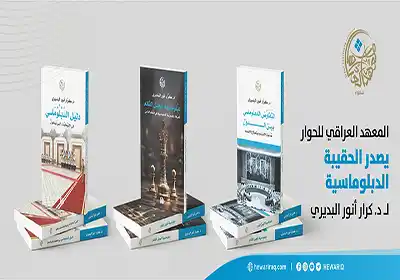
The Iraqi Institute for Dialogue publishes "The Diplomatic Portfolio" by Dr. Karrar Al-Badiri
Official agreement between Iraqi Institute for Dialogue and the Iraqi Media Network to sponsor The Seventh Annual International Conference of “Baghdad Dialogue” 2025

Invitation to the 79th issue of Dialogue of Thought
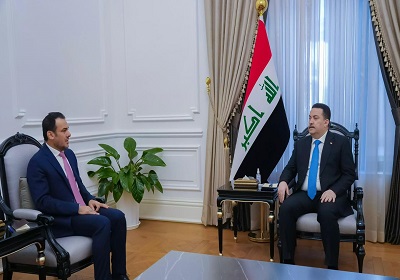
Prime Minister: The path of development will make Iraq a regional political and economic powerhouse

Seventh Baghdad International Dialogue Conference Call for Papers

Praise for the Baghdad International Dialogue: Strengthening Iraq's pivotal role and a meeting point for visions
Comments